Sector Lead Interview: The Energy Sector with Alex Coste

Sector Lead Interview: The Energy Sector with Alex Coste

An Interview about the Energy Sector


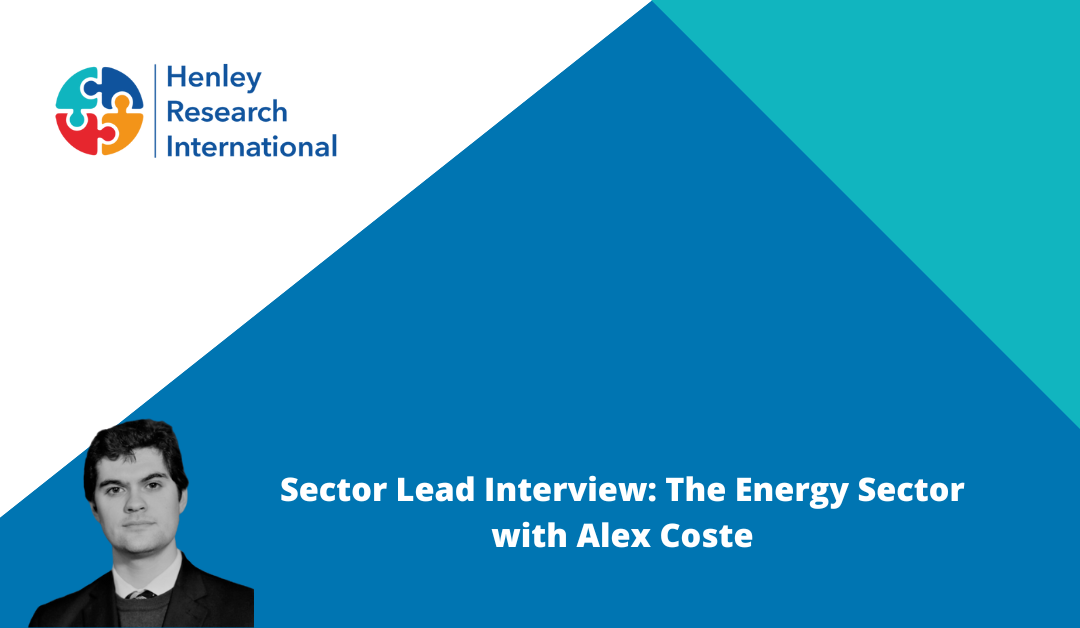
In this insightful interview, our Energy Sector lead, Alex Coste, shares his thoughts on the current state of the Energy Sector.

Get to know our Energy Sector Lead: Alex Coste

Alex joined Henley Research International (Part of Henley Insights Group) in 2021. He has worked in BD and Research roles for International Business Consulting Firms, where he specialised in the Energy Sector within EMEA and APAC markets. As Energy Lead, his focus is aimed to support businesses in their energy transition as well as in their infrastructure needs.

What does the UK energy sector look like right now?

Brexit terms may translate into reduced access to low-cost financing for overall energy projects. The imposition of tariff and non-tariff barriers on low-carbon goods and services, reduced access to a skilled pool of labour, as well as more limited entitlements to European public funding for R&D are post Brexit consequences. However, the perspective of fracking and other controversial forms of energy generation have seemed to have found a second wind in the post Brexit environment.

Due to the lockdown measures, all energy consumptions related to aviation, transportation, commercial activities, and industry have seen a dramatic drop, while those related to residential activities have seen a significant increase. In turn, this affected the Oil & Gas sector greatly, consequently impacting the manufacturing and supply chain sector, who rely heavily on this traditional resource. Further difficulties are felt due to the current developments of inflation caused by massive increases in liquidity by the Federal Reserve, to pay for the trillions of dollars spent by governments during and post Covid-19. Furthermore, additional complications are caused by global manufacturing and supply demand pressures (China) and OPEC+’s voluntary crude withdrawals feed the current strains of our economies and in turn, the energy sector.

The UK’s Energy Information Administration from 2021 shows a need for energy storage capacity, more efficient renewables, but also refining the integration of green energy onto the grid. Furthermore, recyclability in wind and solar sectors need to be addressed and invested in. Offshore energy production seems to be the way forward for the UK, as the world’s largest offshore windfarm, Hornsea 1, is based off the coast of Yorkshire. However, due to current pressures, thoughts on Nuclear and other high-capacity energy production alternatives are being debated upon.

Are there any locations in the UK besides London where we can find energy sector workers and employers?

Throughout the UK one can find a position within the energy sector. However, each region will have their own specialisation and expertise. As a rule of thumb, senior administrative, CXOs and trading roles are mostly found in London. Technical roles and a regional office to support them will be elsewhere in the country – close to the production site(s). Of course, this is dependent upon the area within the energy sector one is looking at.

What is the current state of play of diversity in the UK energy sector?

In 2018, the Guardian carried out research within the UK energy sector finding that women occupy 50% of all the office and business support roles and only 15% of the technical roles. In addition, as quoted in a recent study by PowerFul Women, only 5% of executive board seats in UK-based energy companies are held by women and 61% have no women at all on their board.

Consequently, there has been a push in the energy sector to get women involved in more technical roles. Yet, the UK has a shortfall of skilled engineering labour, further exasperated due to the perception of engineering. As a result, social and industry norms need to change to create an encouraging environment for women to join and lead technical labour.

Sector Lead Interview: The Pharmaceutical Sector with Ralfe Ribeiro

Sector Lead Interview: The Pharmaceutical Sector with Ralfe Ribeiro

An Interview about the Pharmaceutical Sector


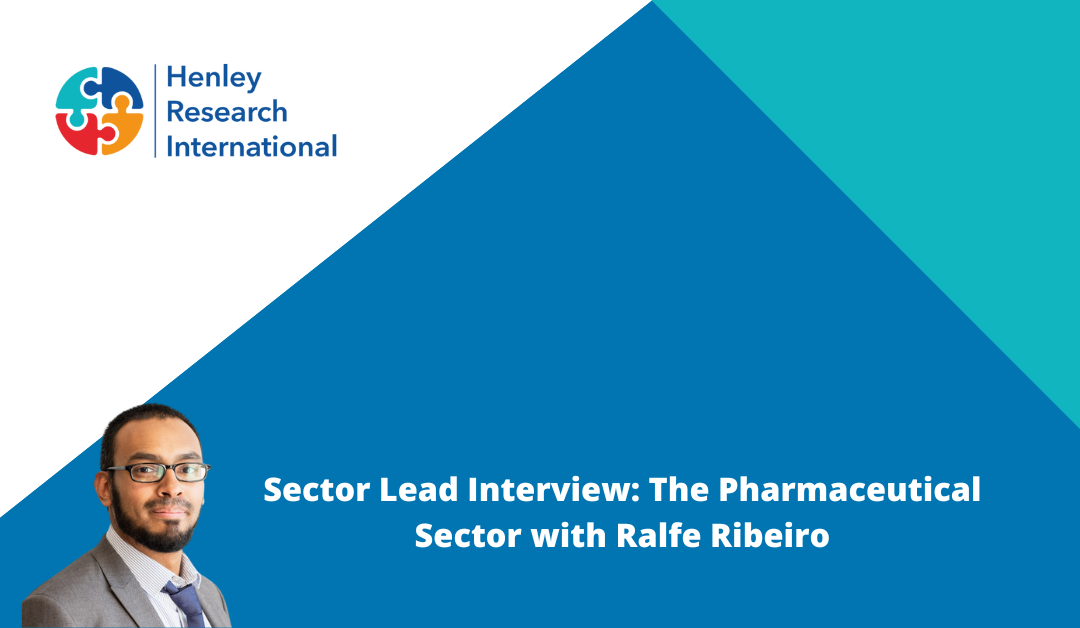
In this insightful interview, our Pharmaceutical Sector lead, Ralfe Ribeiro, shares his thoughts on the current state of the Pharmaceutical Sector.

Get to know our Pharmaceutical Sector Lead: Ralfe Ribeiro

Ralfe joined Henley Research International, part of the Henley Insights Group in 2021. His career started in the lab, where he attained his PhD in Cardiovascular Physiology and Pharmacology. He is currently the Pharmaceutical and Life Sciences Sector Lead for Henley Insights Group and is hoping to use his scientific expertise to help develop long-standing relationships with high profile pharmaceutical and biotech companies.

What does the UK Pharmaceutical sector look like right now?

“Pharmaceuticals value added output in the UK levelled off in 2021 after a strong 13.6% increase in 2020, which still leaves it 13% above the 2019 pre-pandemic level. An incredibly important factor to closely monitor is the impact of Brexit, as border checks and regulatory burdens will impact some businesses via increases in costs and delayed delivery of goods. Some businesses have already started to move their operations to other European countries in order to retain easier market access in the EU.”

“COVID-19 vaccine production is likely to remain high in the coming years, as a large share of the global population has not yet been vaccinated. Any emergence of new virus variants may also bring out the need for additional rounds of booster vaccinations. The vaccination rollout and demand for pandemic-related drugs (e.g. medications to treat fever, drugs for intensive care) has driven growth, resulting in high profit margin increases for producers, and to a lesser extent for wholesalers and pharmacies.”

“This may be applicable to Global Pharmaceuticals as well, but I expect that an increase in the ageing population in many developed markets will create increasing demand for over-the counter (OTC) medicines, generics and brand name pharmaceutical products. Demand for chronic disease medicines is also expected to grow in the mid- and long-term. R&D, as always, continues to remain a strong growth area in the UK. The UK government has also recently announced that over £200 million of state funding will be committed to support clinical research and the manufacturing of new drugs, devices and diagnostics.”

Are there any locations in the UK besides London where we can find pharmaceutical workers and employers?

“This is a great question and the short and sweet answer is that there are a couple of key locations for Pharma in the UK, including Oxford, Cambridge and, of course, London. However, the North West is also a key player as a manufacturing hubs for UK pharmaceutical companies, with 38% of the output and 43% of the UK pharmaceutical turnover being generated there, including AstraZeneca, Eli Lilly and GlaxoSmithKline (according to a report conducted by Enterprise Ireland in 2019).”

What is the current state of play of diversity in the UK pharmaceutical sector?

“According to a report by Accenture, a growing number of pharmas in the UK are redefining and tailoring UK-specific ED&I strategies. This is being done in a number of ways, but the most important one is that leadership is taking an active ownership of the ED&I agenda, which is reflected in their own representation, especially from a gender perspective. Going beyond leadership, UK pharmaceutical companies are increasingly starting to collect workforce ED&I data, which is then being used by some companies to generate insight and inform action-planning which guarantees that ED&I resources are effectively used to address the needs of their workforce and any potential gaps.”

Working harder and cleverer in a Candidates’ Market

Working harder and cleverer in a Candidates’ Market

Yes, it’s a Candidates’ Market at the moment, and has been for a while, probably twelve months or so.

What has caused it? In simple terms, economic upturn following the economic downturn caused by the pandemic. Companies (except those in the relatively few sectors which benefited from Covid) reduced recruitment or stopped it all together, and some downsized. At lower and mid-tier levels, many of those displaced and jobless retrained, changed career direction or, in the case of many Europeans, went home. At higher levels, executives sat in, most kept their jobs because governments were happy to incentivise companies to retain, but virtually nobody moved. As we emerged from the pandemic, everyone started hiring again.

So what happens in a Candidates’ Market?

At executive level, the best people are targeted by (often) multiple suitors. The salaries companies are prepared to pay rise sharply – if you aren’t prepared to pay you won’t get anyone. And existing employers, desperate to keep their executives, are prepared to counter-offer if their top human assets decide to hand in their notice. Never has the incidence of counter-offering been higher, and therefore neither has the incidence of candidates accepting a job and then being seduced into staying put, later than the eleventh hour.

How can companies get the right people in? There is no magic formula, frankly, and much of what we would recommend is based on the largely unchanged checklist of questions we have been asking our clients for years. Here it is:

  1. What is it about you as a company/employer that will be attractive to a prospective senior-level candidate?
  2. How can you sell your organisation’s culture?
  3. What are you offering in terms of career progression?
  4. Are you offering genuine personal development opportunities?
  5. Is there something in your offer that will genuinely make a candidate think “this is different to what I have at the moment or to what others are offering”?
  6. Is the basic salary competitive and is it at the right level to realistically attract interest from the calibre of individual you covet?
  7. Are the right performance-related incentives in place, short-term and long-term?
  8. Are you clear on what you can offer in terms of workplace and location flexibility, and is everyone in your organisation committed to this?
  9. Are you prepared to relocate, and to pay for this if necessary?
  10. Are all the key stakeholders in your business aligned on all these things to ensure the messaging is clear and consistent, and articulated enthusiastically?

If all these questions can be answered positively, a prospective employer has a strong and differentiated proposition. As an ambassador for our clients, we at Henley are happy to deliver not only strong messages, but strong candidates.

The other area in which our clients can achieve this differentiation is how they handle candidate management. Too often key stakeholders are unavailable, timescales get protracted and candidates’ enthusiasm wanes – they’ve been sold something exciting but nobody seems to want to close the sale.

Some companies are successfully adopting very aggressive timelines in recruitment processes, with candidates meeting with key stakeholders over the course of one week and then an offer being made. Not only does this demonstrate how committed the company is to securing that candidate, but it also reduces the likelihood of offers being made to that candidate by other prospective employers.


Mark Senior, April 2022

Get in touch: mark.senior@henleyresearch.com